

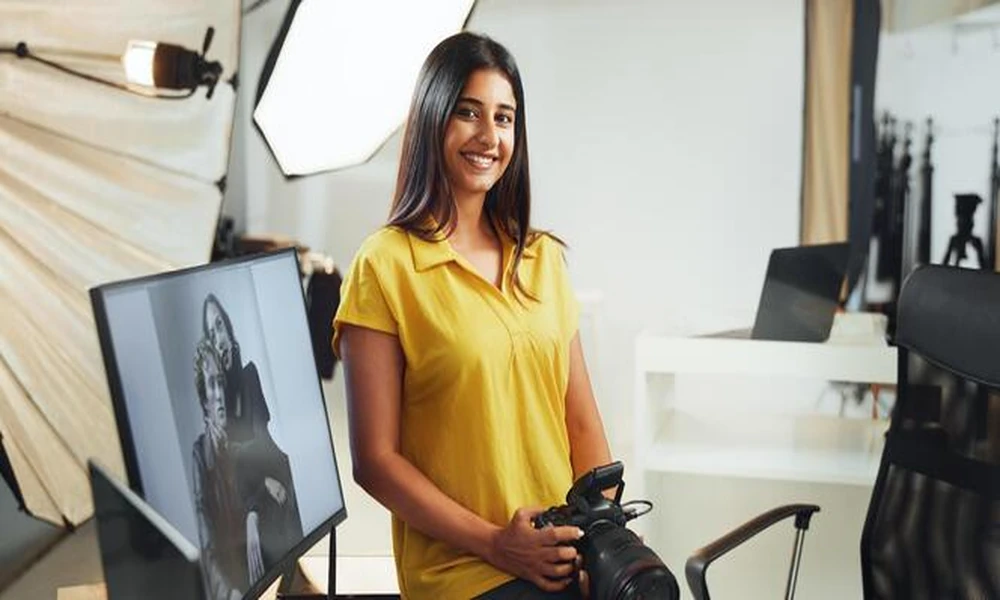
A maker portrait should connect a recognizable person with the work they care about. Choose one meaningful object or material, find a moment that belongs to the maker’s real routine and keep the surroundings from overwhelming the face. The image does not need to explain an entire production process or turn a modest workspace into a theatrical set.
The object should open the story, not hide the face
A furniture piece, ceramic vessel or textile can tell a viewer something about the person who made it. But the object should not become so dominant that the portrait stops introducing the maker. Think about where the image will appear. An about page may need a stronger human presence than a product catalogue, even when both belong to the same business.
Select an object for what it means, not merely for its size or visual drama. It might represent a material the maker enjoys, a technique central to their work or a recent direction they want to explain. Confirm that the accompanying story is accurate. The photograph should not imply that someone created an item they only sourced, restored or collaborated on in a different role.
A Toronto maker exploring a portrait built around a working environment can discuss that relationship with Indigo Visual. Its lifestyle-portrait service is a relevant category for an enquiry about a person in context. Explain the object, the intended use and the location, then confirm whether the proposed scope suits the specific idea.
Consider how much of the object is needed. A complete room-sized installation may be difficult to include while keeping the person’s face readable. A smaller related element could make the relationship clearer. This is not a requirement to simplify the work itself. It is a decision about what one portrait can reasonably communicate.
Bring the photographer into that decision rather than treating the object as a fixed prop. A position that looks balanced in person may conceal the maker’s hands or create a distracting shape near the face. Describe why the object matters and what must remain visible. The composition can then serve the meaning rather than merely accommodate a predetermined arrangement.
Choose a moment the maker actually recognizes
A useful pose may begin with a familiar action: examining a surface, holding a finished piece or looking over an approved drawing. It need not imitate a complex manufacturing step. The action should feel plausible to the person doing it and be appropriate for the photographic setting. Do not ask someone to perform technical work differently just because a camera is present.
Separate a posed portrait from a documentary claim. A maker can look toward the camera while holding an object without pretending that the image was captured during an uninterrupted work session. There is nothing dishonest about an openly arranged portrait. The problem arises when the surrounding description presents an invented activity as evidence of how the work was actually produced.
Let the maker explain which gestures feel natural and which do not. A photographer may suggest a visually strong arrangement that does not match how a tool is used or how a delicate piece should be handled. That is a reason to collaborate on another approach. The portrait should not require the subject to accept an inaccurate scene in order to appear cooperative.
Clothing can support the same sense of continuity. The maker does not have to arrive in their messiest workwear to be authentic, but an unfamiliar costume may create unnecessary distance from the business. Choose an appearance that feels considered and recognizable. If several versions are planned, give each a purpose instead of changing outfits simply to increase the number of photographs.
Hands may add useful information about the relationship with the object, but they should not become an automatic visual cliché. A close-up of hands can be a supporting image; it may not replace a clear portrait where the website needs to introduce the person. Discuss the difference between the main image and supplementary details before allocating time to each.
Give the background a supporting role
A workshop contains many objects that make sense to its owner and little sense to a new viewer. Choose what belongs in the frame intentionally. A few relevant materials may establish context better than a wall of unrelated tools. Tidying the photograph is not the same as pretending the workspace is always immaculate; it is a way of directing attention toward the intended story.
Check the surroundings for information that should not be public. Client drawings, order details, addresses and unfinished work may require different treatment from general materials. Decide what can be shown through the appropriate approval process. The photographer should not have to infer which apparently ordinary notes are sensitive or which pieces have not yet been announced.
Think about the relationship between this portrait and the product images around it. If the website uses calm, detailed photographs, a busy portrait may interrupt the visual conversation. If the brand is expressive and colourful, the maker need not disappear into a neutral frame. Share the existing materials so the photographer understands the environment in which the finished image will live.
Review the shortlist for both personal recognition and an accurate connection to the work. Ask whether the selected object contributes useful context and whether the background supports that context. A photograph may be attractive but tell the wrong story about the maker’s role. Correct that mismatch before a caption is asked to explain it away.
Keep the approved main portrait and supporting details clearly identified in the delivery. A designer should know which image introduces the maker and which images illustrate the surrounding process or materials. Confirm the agreed uses and any limits, particularly where client work or shared studio spaces appear.
One clear relationship between a person and an object can be enough. A quiet portrait beside a piece the maker knows well may reveal more than an elaborate scene filled with every tool in the workshop. Let the viewer meet the person first; the rest of the work can unfold elsewhere on the page.