

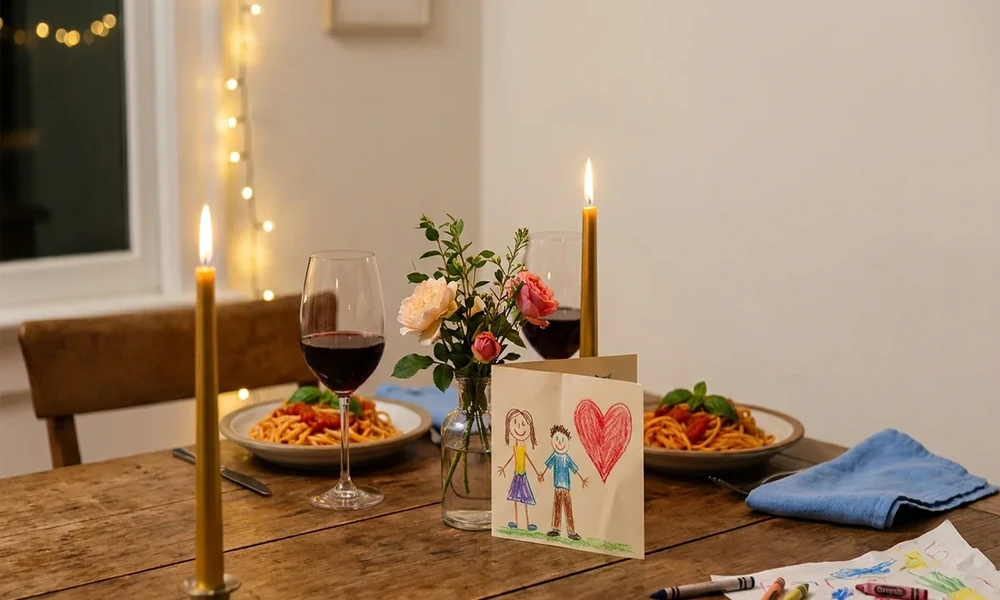
A casual anniversary dinner at home works best when both people recognize something of themselves in it. Choose a food you actually want, make the place where you will eat inviting, and leave enough of the evening unassigned. A familiar pierogi dinner can belong to a celebration without becoming a cooking project that one person spends the whole night managing.
Choose the meal together before assigning tasks
Begin with the kind of evening you want to have. Perhaps dinner is the main event, with time to talk over the table. Perhaps you want to eat before watching a favorite film or looking through photographs. Those are different plans. A meal with several stages may suit the first, while a single plated dinner gives the second more room. Neither needs to imitate a restaurant reservation.
Ask about the food before asking who will cook it. A surprise menu is less helpful if one person would rather have something familiar after a demanding day. You can retain a small surprise in the setting, music or dessert while agreeing on the main dish. This also prevents the more enthusiastic cook from treating an elaborate menu as a gift the other person must appreciate.
Pierogi fillings offer concrete choices. Oh! So Cheesy contains potato and cheddar; Crazy Wild Mushroom combines potato and onion with white, portabello and porcini mushrooms. These suggest different dinners without requiring an argument about which is more appropriate for an occasion. Choose the one you both enjoy, or agree that two clearly separated varieties are worth the extra preparation.
For a Cleveland shopping plan, consult the retailer map for Cleveland once you have settled on the filling. Let the actual purchase fit the evening rather than allowing an ambitious shopping expedition to become part of the celebration by accident. If a particular variety matters, check that with the store before arranging the rest of the trip around it.
Then divide the work in ways that feel comfortable. One person might shop while the other clears the dining area; one might handle the package-directed cooking while the other prepares a cold accompaniment. Sharing does not require standing beside each other at every stage. It means agreeing on what each person will do and avoiding an invisible list that only one of you carries.
Give the table more attention than the menu length
A table can feel considered through subtraction. Remove the unopened mail, charging cables and objects that usually occupy the eating space. Put away the laptop rather than shifting it to the far end. This changes the room’s purpose more clearly than adding several decorations around the same daily clutter. In a small home, you need only prepare the area you will actually use.
Bring out plates that you enjoy using, even if they are your everyday ones. Set out the utensils before the food is ready so dinner does not begin with repeated trips to a drawer. A small dish for an optional topping gives each person control and keeps the main plate uncluttered. Leave enough space between the settings for passing food and resting a glass comfortably.
The accompaniment can supply a detail that is personal without demanding much invention. Perhaps one of you particularly likes cucumber with dill, a sharply dressed green salad or simply prepared green beans. Choose something that belongs beside the filling and that you have made before. A remembered preference carries more meaning than an unfamiliar side selected because it looks formal in a photograph.
Think about the physical experience of the meal. A centerpiece that blocks your view, a playlist loud enough to interrupt conversation or a platter that occupies every inch of the table works against an intimate dinner. Put the decorative detail where it can be enjoyed without negotiating around it. If you are eating in a living room, give both people a stable place for a plate rather than arranging the room only for its appearance.
You can also choose a reminder of a shared occasion: a song you heard together, a napkin brought home from a trip, or a handwritten note. One such detail is enough. It does not have to become a theme repeated through the food, flowers and tableware. The point is recognition between the two people who are there, not an explanation for an audience.
Leave the evening free of unnecessary kitchen projects
Read the preparation instructions before deciding when dinner will happen. Holy Perogy products are sold frozen and uncooked, so the cooking stage needs real attention. Keep that stage distinct from setting the table, choosing music and preparing the side. A relaxed plan gives the cook the equipment and space required by the package rather than assuming everything can be finished while the first course is being eaten.
Resist adding a homemade sauce merely because the evening has a name. If the filling already gives you the flavor you want, a separate condiment may be plenty. The same applies to dessert: something chosen because it is a shared favorite can be more suitable than a baking experiment. Consider the dishes each extra component creates as well as the moment it contributes at the table.
Agree on a modest cleanup plan before sitting down. Clear what needs immediate attention after dinner, but avoid assigning one person a long kitchen shift while the other waits to start the rest of the evening. If putting away food and washing the essential cookware takes priority, do that together or divide the jobs. The celebration should include the person who prepared it.
Leave a little room for changing your minds. You may want to stay at the table longer than expected or skip the planned movie. A meal that does not depend on successive courses makes that possible. Keep the song, the familiar filling or the small table detail that feels like yours, and let the evening develop around the two of you.